Data Pipeline
Each of the DataJoint Elements are a set of tables for common neuroinformatics modalities to organize, preprocess, and analyze data. Each node in the following diagram is either a table in the Element itself or a table that would be connected to the Element.
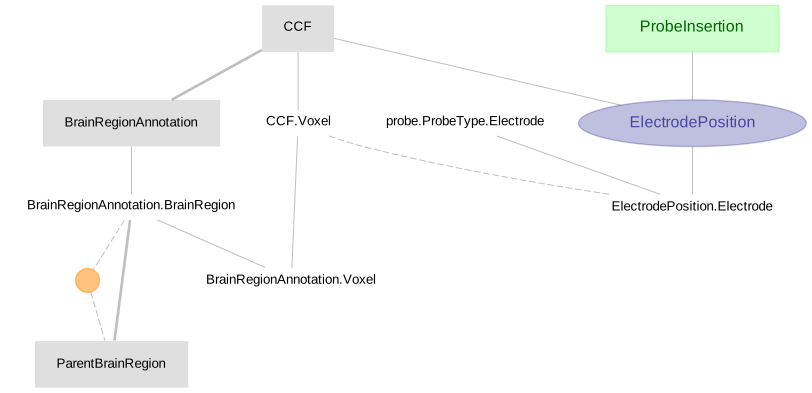
The Element is separated into two schemas:
coordinate_frameworkingests standard atlases and retains voxel-based lookup tables, including references to brain regions, acronyms, and standardized color codes.
electrode_localizationpairs the above reference tables with Neuropixels electrode location data from the Element Array Ephys probe schema.
coordinate_framework schema (API docs)
| Table | Description |
|---|---|
| CCF | Common coordinate framework (CCF) identifier, version, resolution, and description. |
| CCF.Voxel | CCF voxel coordinates. |
| BrainRegionAnnotation | Name and voxels of each brain region associated with an atlas. |
| BrainRegionAnnotation.BrainRegion | Brain region name, acronym, identifier, and color code. |
| BrainRegionAnnotation.Voxel | Voxels associated with each brain region. |
| ParentBrainRegion | Hierarchical structure between the brain regions. |
- Note: Acronyms in DataJoint do not perfectly map on to the Allen Institute's published standard. By default, DataJoint databases are not case sensitive. Instead, acronyms are converted to snake case to avoid naming collisions. While we depart from the standard, preliminary interviews with users indicate no bias toward the official standard. Visit the tutorial Jupyter notebook for a demonstration of converting between the case sensitive and snake case standards.
electrode_localization schema (API docs)
| Table | Description |
|---|---|
| ElectrodePosition | CCF voxels associated with a given probe insertion. |
| ElectrodePosition.Electrode | CCF voxels associated with each electrode. |